While scientists scramble to find a potential vaccine for the current coronavirus (COVID-19 illness) and researchers investigate the numerous uncertainties surrounding it, Irish Businesses can start taking coronavirus precautions.
There are many reasons why businesses across Ireland should be considering the disruptions the coronavirus could have on their business. For one, we are one of the most open economies in the world which means we trade and deal with people from countries that have already been infected by Coronavirus, every day. This can come in the form of supply chain interactions and human interactions in an office and/or from work travel.
Not to take away from the seriousness of the matter, but Irish people also love a holiday and recent updates of the coronavirus haven’t slowed us down in this regard with many still flying off in search of sun or snow already in 2020.
As of February 25th, there are more than 80,000 confirmed cases worldwide of the COVID-19 illness. Typical symptoms have been marked by fever, coughing, difficulty breathing and pneumonia, with the majority of cases detected in China. However, as we’ve now witnessed, outbreaks have occurred closer to home including Italy, France, Spain, The UK, Germany, Belgium, Austria…the list is growing.
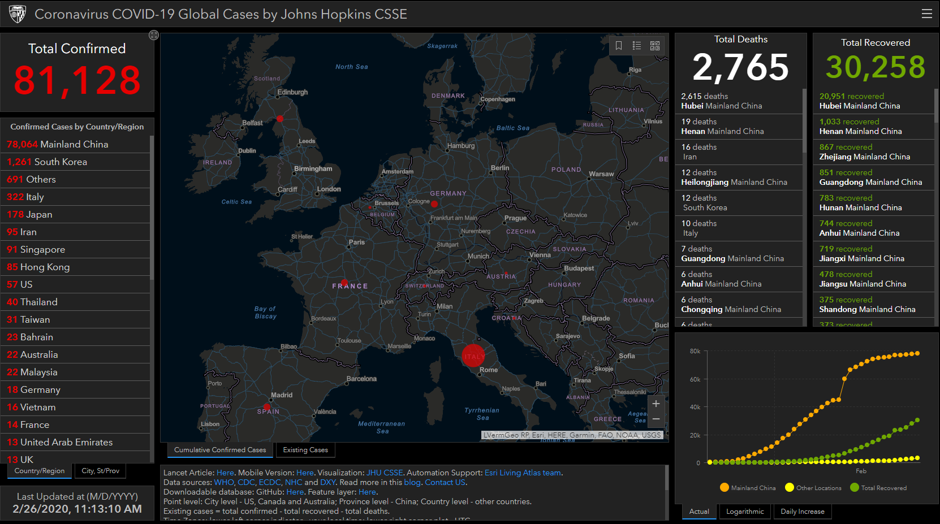
On 30 January, the World Health Organisation declared the crisis as a “global health emergency” once the virus spread outside of China. Since then, the infection has spread to more than 25 countries, killing 1,800 people so far.
The management team at RECRUITERS has been planning for the possible operational impacts of the Coronavirus - particularly if everyone had to work from home for a sustained period. We then thought it would be interesting to learn how other businesses in Ireland are dealing with the possible impacts. Take our short, three-minute, Coronavirus business impact survey.
While there are those that are prepared, businesses, in general, are underprepared to respond to pandemics. Why? Because it's a low probability risk in any given year.
Anne Schuchat, principal deputy director of the CDC, said there was a need for “new strategies” tailored to local circumstances. “The current global circumstances suggest it is likely this virus will cause a pandemic,” she said.
Nancy Messonnier, director of CDC’s National Center for Immunisation and Respiratory Diseases, said: “It’s not so much a question of if this will happen anymore, but rather more a question of exactly when this will happen and how many people in this country [America] will be infected.”
The coronavirus has already rocked global markets and disrupted the supply chains of businesses based in Ireland. It has already closed a technology firm in Dublin for two days as a preventative measure, and it has caused a fall in trade in Asian businesses here in Ireland.
Ireland is more exposed than it was during the SARS epidemic according to John Whelan, managing partner of international trade consultancy Linkage Partnership.
"Back in 2003 when the SARS epidemic hit, our trade with China was something like €500m in terms of exports," he said. "Last year we had over €8 billion in exports, so it's a much bigger market for us - it's one of our top markets now. So, when the Chinese market starts to wobble under the current virus, it has quite severe impacts on a number of sectors."
We have touched on the impact it’s already having to Irish businesses in contact with global stock markets and supply chains – particularly those in connection with imported goods and services which will have ripple effects on the manufacturing and construction industries in Ireland.
However, as a result of travel bans and other measures being imposed by Governments, the tourism and hospitality industries in Ireland will be starting to feel the heat. According to Forbes, Disney has already had to close two theme parks. Starbucks shuttered 90 stores, with KFC, Pizza Hut, and McDonald's following suit.
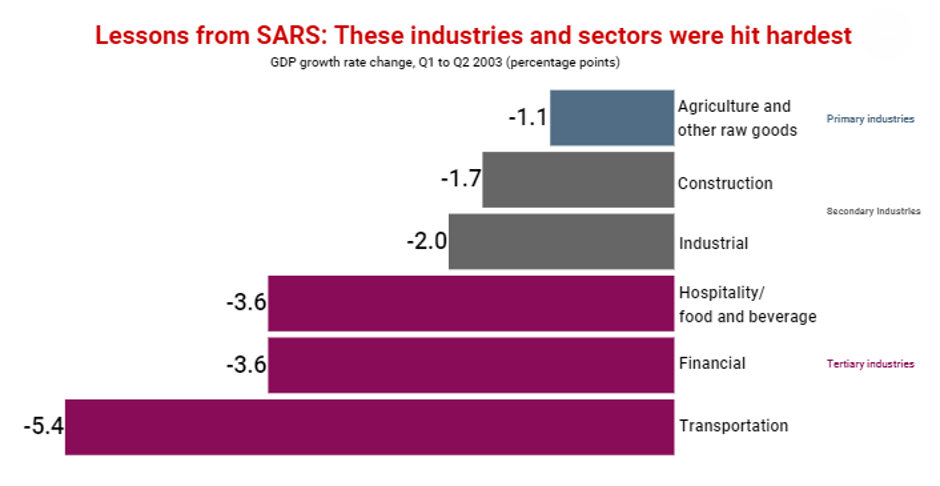
Like in any crises though, there is always opportunity. Online consumption will likely increase as a result of people’s uncertainty surrounding human interaction – if, of course, the supply of those goods and services are distant from the affected supply chains.
Many businesses operate on a person-to-person basis and therefore, no industry or business will be safe from complete disruption should the virus travel to Ireland. While it may be too early to predict the human and financial cost of the coronavirus, a wait-and-see tactic is always the most damaging strategy in uncertain times.
What we know about the coronavirus changes hour by hour, making it hard to predict how the virus might spread to Ireland and how we should be prepared for it. But, there are a few simple precautions that people and businesses can take now.
Identify your business’ main vulnerabilities
Schedule a meeting with your senior management team to discuss the impacts the coronavirus may have on your staff and your clients. Call out the risks and adjust any medium to long-term strategies and 2020 plans. Your vulnerabilities will also be your competitors, so use this time to identify where you could invest to gain market share.
Talk to your team
A simple but often overlooked pre-caution is talking to staff. Many of your team may already be concerned about the impact the coronavirus may have on their professional and personal well-being so by just talking to them, you are helping. Brief the staff on your continuity plans, contingency plans and pre-cautionary plans. If you don’t have any in place just yet, tell them you read this article with the intention of putting plans in place.
Protect your talent
The safety and well-being of employees should be your priority and investment can be put in place today to ensure a safer and healthier working environment by stocking up on hand-wash, face masks and helpful advice that has proven to reduce chances of people catching the virus.
Prepare your Management
Ensure all managers are aware of their responsibilities and understand their role throughout business disruptions. Businesses should also discuss contingencies with their accountants and banks should there be significant business disruptions.
Be able to work remotely
One of the main disruptions for businesses may be the need for staff to work from home and how they are equipped for such a situation. Employers should consider employees access to a computer from home, access to network documents, emails and other technology over a long period of time. Working from an iPhone may be fine for a snow day, but will probably not suffice over a long period of time. Contingency plans must be in place so that staff can work from home.
Be able to access new talent
Businesses should consider whether they would be in a position to access new talent if some of their workforce falls ill. The possible impacts on business plans, strategies and projects could be enormous if certain key people are absent.
Test your plans
If you already have a remote work ecosystem in place, test it to ensure it is still working and up to scratch. You will be surprised by the number of glitches you never knew existed to-date.
Put the right tools in place
One of the benefits of technology is that it can help keep your team connected even when they aren't in the same physical location. This is especially important when it comes to collaborating and communicating across teams. Consider testing and implementing new technologies such as video conferencing tools like Zoom or project management software like Slack or Basecamp. Start putting plans and policies in place regarding their usage by teams.
Work with others that value you
Ensure third-party suppliers and agency partners are equipped to work under the same circumstances as you. We at RECRUITERS have already put our plans in place to ensure that we can still service our clients and candidates remotely using cloud technology, video conferencing and recruitment management software that are in-line with GDPR.
Trust your people
We wouldn’t be Ireland’s most trusted recruitment partner if we didn’t trust our own team. Working remotely inherently requires letting go of a measure of control. If you find yourself anxious at the idea that your team will be working outside of your watchful eye, remember that you hired this team for a reason, and now it's time to empower them to succeed.
Stay up to date
We are advising all clients who are planning to travel to affected areas, to regularly review the Government of Ireland advice at gov.ie/health-covid-19, the travel advice from the Department of Foreign Affairs Travel Advice, the Department of Business, Enterprise and Innovation Business Continuity Planning Checklist Business Continuity Planning Checklist Responding to an Influenza Outbreak and the World Health Organisation WHO Corona Virus Advice for the Public.
 Andrew Sheehan is the head of marketing at RECRUITERS